TEACHING
Alongside my clinical practice, I teach. I am an adjunct professor at The Chicago School of Professional Psychology, where I teach in the doctoral PsyD and graduate curriculum, and I teach at the undergraduate level at California State University, Northridge in the Department of Child and Adolescent Development. Teaching is not something I do on the side of clinical work. The two feed each other, and the students I teach are the reason I stay as close to the research as I do.
Why I Teach
I want students to have a secure base. That phrase means something specific in my clinical work, and it means the same thing in my classroom: A stable, predictable relationship from which a person can take real risks. Learning to be a clinician requires being wrong in front of other people. It requires sitting with material that is genuinely hard, admitting what you do not yet understand, and trying an intervention you have not tried before. None of that happens in a room where students are managing their own exposure. My job is to build the conditions that make the risk worth taking, and then to stay steady while students take it.
The exchange runs both ways. Teaching keeps me reading, keeps me current, and puts me in regular conversation with people who are encountering this material for the first time and asking the questions that experienced clinicians stop asking. That has made me a better psychologist, and I say so to my students.
My teaching is grounded in the same theory that grounds my clinical work. Attachment theory, through Bowlby, Ainsworth, Main, and Fonagy. Object relations, particularly Winnicott. Interpersonal neurobiology, through Porges, Siegel, and Schore. Students encounter these frameworks as living tools rather than as a historical survey, because that is how they will use them. When we talk about a nervous system regulating in the presence of another nervous system, we are also talking about what is happening in the room while we discuss it.
Designing for Access
I recently earned a microcredential in Universal Design for Learning, and I have been redesigning my courses around it.
UDL rests on a simple premise: When you build a course for the range of people who will actually take it, everyone benefits from the design. Multiple ways into the material. Multiple ways to demonstrate understanding. Clear structure that does not require a student to guess at what matters. The alternative is a course built for an imagined default student, with everyone else negotiating for access one accommodation at a time.
That premise is not far from how I think about clinical work. I do not expect a client to arrive already fitting the shape of the treatment. The work is to build something that meets the person in front of me. A course deserves the same care.
In practice this shows up most in how I assess. I use low-stakes retrieval practice so that students are not staking a grade on their first encounter with an idea, and I build in metacognitive reflection so that students are tracking their own learning rather than only receiving a score. I grade with attention to voice and engagement, not only to whether the boxes were checked.

Doctoral and Graduate Teaching
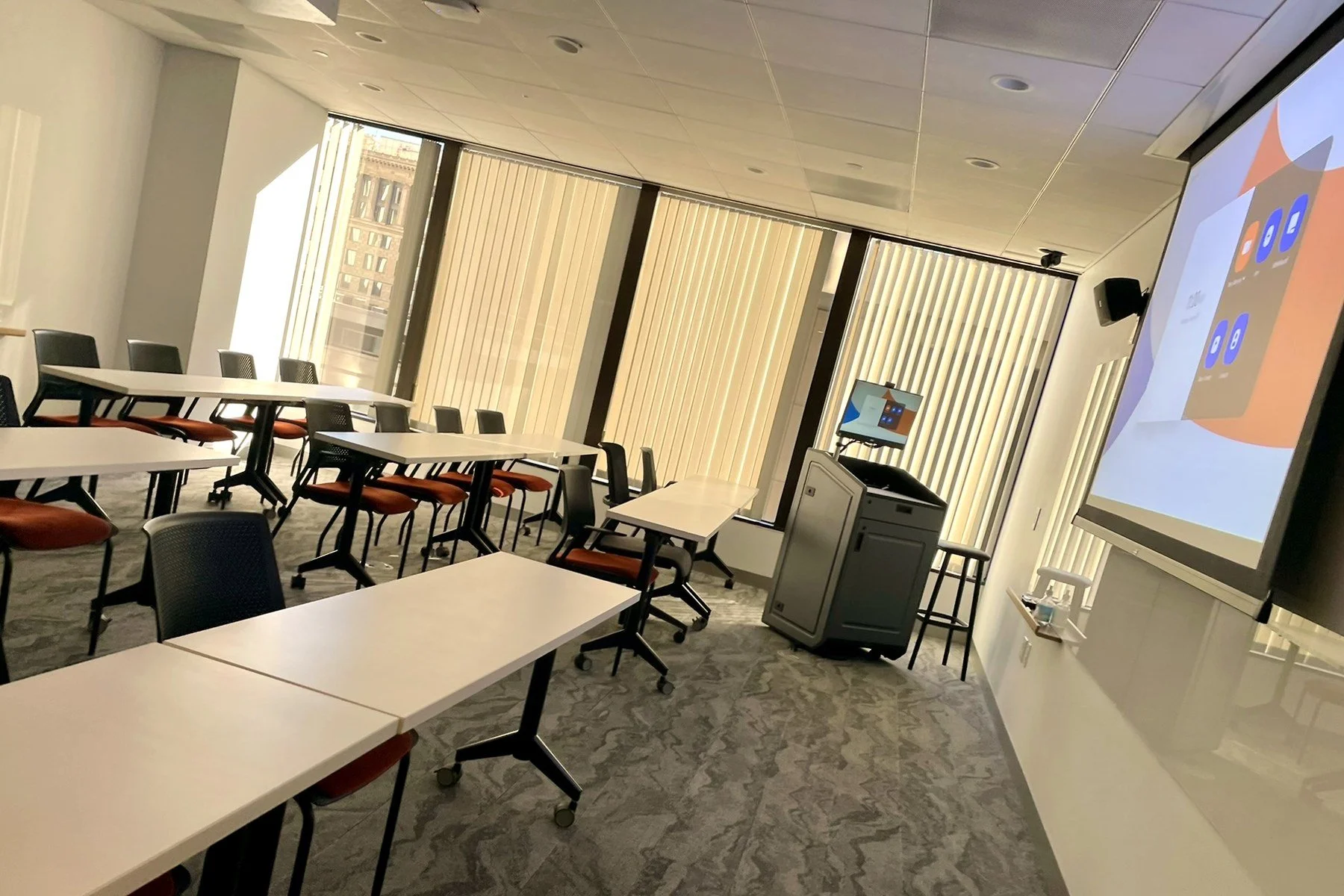
At The Chicago School of Professional Psychology, I have taught Advanced Child and Adolescent Treatment, Advanced Intervention: Group Therapy, and Human Development Across the Lifespan.
The group therapy course is the clearest example of how I teach. The class functions as a group from the moment students walk in on the first day. The arc of the term follows the developmental arc of a real group, including the awkward early weeks, the conflict that surfaces around the middle, and the work of ending well. Students are not only reading about group process. They are inside one, noticing what they feel, and learning to name it. There is no substitute for that, and no reading assignment that produces it.
Undergraduate Teaching
At California State University Northridge (CSUN), I teach CADV 310, Developmental Impacts of Child Abuse and Neglect. It is a large lecture course of roughly 122 students, which I teach on my own without a teaching assistant or grader.
The course carries writing intensive and information competence designations, so students are locating real research, evaluating it, and writing about it alongside the content. Our focus is developmental: How maltreatment affects the developing child, what the mechanisms are, and what the research actually supports about risk and resilience.
A course this size is also where the access work has mattered most. At 122 students, flexibility has to be built into the structure of the course, because it cannot be negotiated student by student. Designing the course well up front is what makes it possible to reach students who would otherwise fall through, and it is better for the students who would have managed either way.
Guest Lectures, Supervision, and Consultation
I am available for guest lectures, consultation, and professional talks. I am particularly glad to talk with programs and clinicians working on child and adolescent treatment, group therapy, attachment-informed practice, and course design that takes access seriously.
If you are a student, a colleague, or a program considering any of the above, you are welcome to reach out atangela@angelayoungspsyd.com.
Get in Touch